
December 17, 2025
A previously published paper, ChatGPT as a Tool for Biostatisticians: A Tutorial on Applications, Opportunities, and Limitations by Dobler et al. that also appeared in Statistics in Medicine, which according to Zhu provides a timely and insightful assessment of how large language models (LLMs) can assist in biostatistical work. The authors had showcased several real-world use cases to illustrate ChatGPT’s capabilities and downsides in the biostatistical domain. Zhu states that Dobler et al. had set a pragmatic tone and reinforced that LLMs, while transformative, are no substitute for sound statistical judgment. Zhu then also states that they applaud the authors for this balanced, real-world tutorial, which serves as a starting point for biostatisticians interested in harnessing artificial intelligence (AI) in practice.
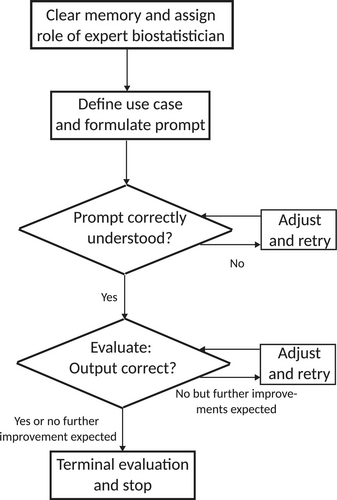
The author mentions that these LLMs should be given qualifying exams to see if they can pass since they are becoming more adapt and analyzing, synthesizing, and interpreting data, like a human. This could be used as a benchmark for biostatistics to see how well the LLMs function in certain biostatistical areas. As Zhu pointed out, the rise of LLMs will demands more statistical rigor and critical thinking from us, not less. The first reason is that LLMs are not infallible as shown by Dobler et al and another paper. Although the LLM can produce output that appears perfectly fluid and convincing, it could actually be subtly wrong or based on faulty reasoning. The second reason is that effective use of LLMs requires critical thinking in the guidance that biostatisticians would provide. LLMs often need precisely crafted prompts and follow-up questions to produce correct outputs. The aforementioned tutorial paper demonstrates this well that while ChatGPT-4o could eventually solve some biostatistics problems, it could only do this with careful guidance and multiple attempts. Essentially, a biostatistician must know when the LLMs’ answer is wrong and how to maneuver it in the right direction, and also how to break a complex task into smaller sub-tasks for the LLM with clear instructions.
The big question then was that what does it mean to be a biostatistician now. Basically, it is the same role as before but the way about going about solving data analytic problems would be changed with different tools. Now a biostatistician might spend less time with tedious coding and more time on problem solving by asking the right questions and devising rigorous analysis plans. The artificial intelligence (AI) can be regarded as freeing the statistician from doing mundane tasks. The value of the biostatistician will lie in how wisely they harness these new tools and still ensure statistical rigor and critical thinking.
Written by,
Usha Govindarajulu
Keywords: biostatisticians, AI, LLMs, ChatGPT
References:
Dobler D, Binder H, Boulesteix AL, Igelmann JB, Köhler D, Mansmann U, Pauly M, Scherag A, Schmid M, Al Tawil A, Weber S. ChatGPT as a Tool for Biostatisticians: A Tutorial on Applications, Opportunities, and Limitations. Stat Med. 2025 Oct;44(23-24):e70263. doi: 10.1002/sim.70263. PMID: 41128019; PMCID: PMC12548020.
Zhu B. (2025) “Biostatisiticians Meet AI: Navigating Shifts While Preserving Principles” Statistics in Medicine. https://doi.org/10.1002/sim.70271
