
June 17, 2026
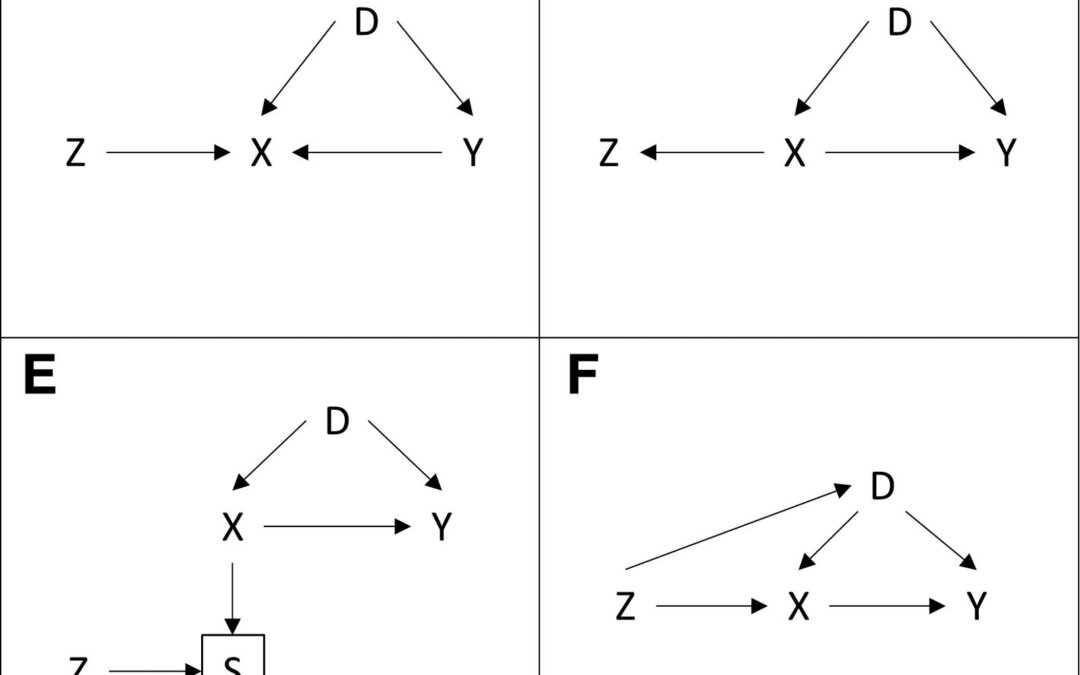
In this paper, the authors have described a simple strategy for empirically assessing the plausibility of conditional unconfoundedness (i.e., whether the candidate adjustment set of covariates suffices for confounding adjustment), which does not require any explicit assumptions about the confounding structure, relying instead on assumptions related to temporal ordering between covariates, exposure, and outcome (which can be guaranteed by design) and selection into the study. The proposed method essentially has relied on testing the association between a subset of the covariates included in the adjustment set (those associated with the exposure, given all other covariates) and the outcome conditional on the remaining covariates and the exposure. Confounding has been one of the major limitations of causal inference. In this paper, they used the word “confounding” to mean the existence of any open backdoor path (a term from causal inference regarding confounding.
The authors went through simulations and a real word data example to show the benefit of their method to assess the plausibility of conditional unconfoundedness. The authors considered several relevant aspects of an epidemiological study, including temporal relationships between variables and the possibility of selection bias and measurement error. In addition to their theoretical proofs corroborated by simulations, their use of an applied example helped to show how to implement the method in practice and also the importance of power calculations.
Since their approach cannot differentiate whether C is invalid or minimal, it is more applicable to situations where C is unlikely to be minimal. For example, if it was conservatively selected and therefore likely contains redundant covariates (in the sense that adjusting for only one out of two or more would be sufficient to block a given biasing path). Essentially, their method is not primarily aimed at covariate selection but rather at testing if a selected covariates set would be sufficient for confounding adjustment.
Written by,
Usha Govindarajulu
Keywords: observational studies, unconfoundness, epidemiology, unmeasured confounding
References:
Hartwig FP, Filling K, and D Smith G (2026) “Empirically Assessing the Plausibility of Unconfoundedness in Observational Studies” Epidemiology 37(4): DOI: 10.1097/EDE.0000000000001985
Hernán MA, Robins JM. Causal Inference: What If. Chapman & Hall/CRC; 2020.
https://images.journals.lww.com/epidem/Original.00001648-202607000-00014.F1.jpeg